
Reading for Writers
Cosy up with a book and learn by example.

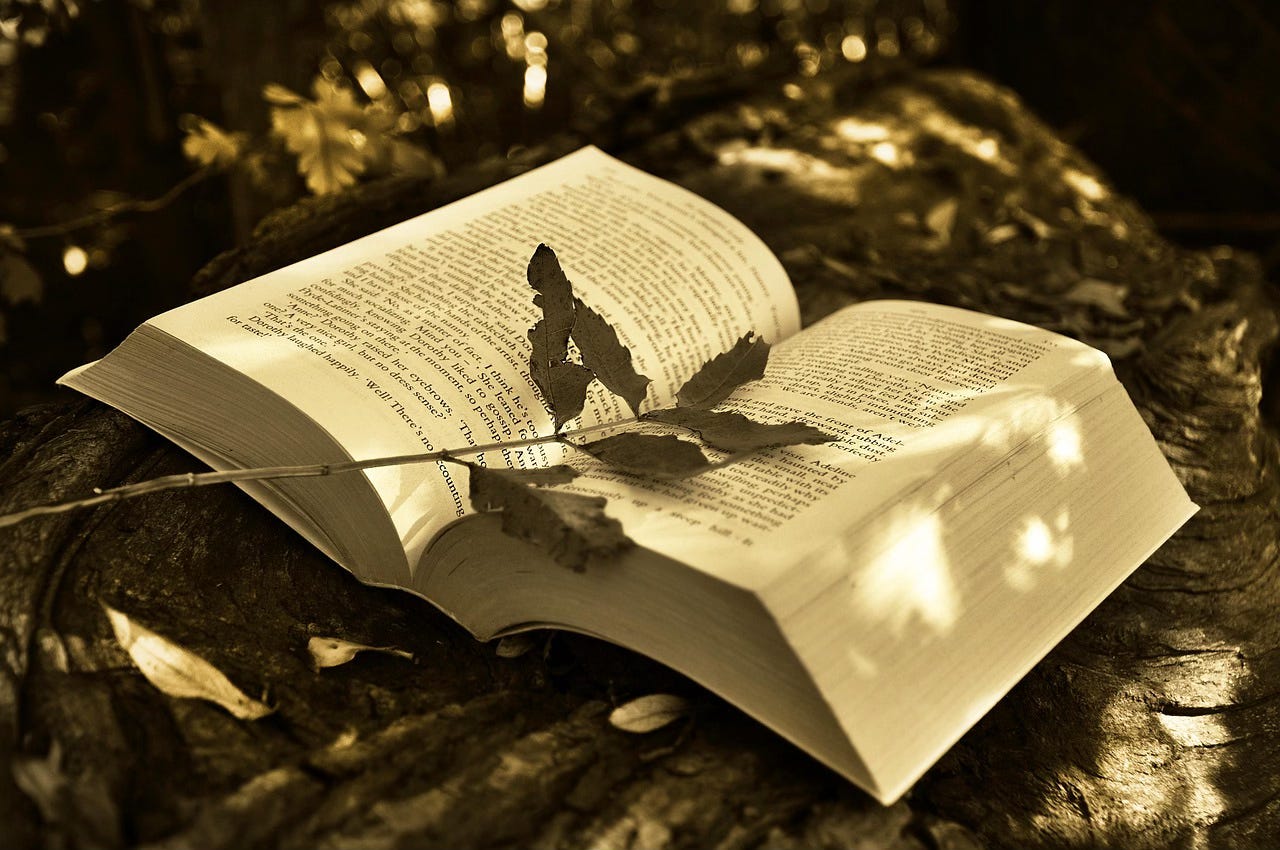
As I write this it’s four pm and dark. The air outside is chilly and damp. This is not the crisp, bright sort of winter day of brisk walks, pink noses and beautiful ice patterns. This is the gloomy, grey kind of winter that makes you want to hide under a blanket until Spring.
It’s the kind of day for a good book and a mug of hot chocolate. Which I hope is what those of you also in the northern hemisphere can do. (Those of you in the southern hemisphere might find a tree in the shade to read under.)
Many writers are also prolific readers, highly familar with the urge to retreat from the world’s problems between the pages of a good book. Some of us prefer our words turned into TV shows or movies, and for the purposes of this post, please know that by ‘reading’ I include any form of art that starts as words on a page. It’s all the same. I meet many writers who worry they don’t read much, when in fact they consume lots of words, it’s just that maybe the raw words on a page isn’t what captures them. It all counts.
The difference between writers and other readers is that writers might read for two purposes. The first purpose is for pleasure; for escape and entertainment; for education and to have our thoughts provoked on the subject matter. The second is to learn more about writing, to improve our own.
Sometimes writers tell me that writing (and especially editing) has ruined reading for them. Whatever they read they’re critically engaged with the craft and can’t relax into the piece. Others tell me they struggle to learn much from reading, because they lose themselves in the story. I have a few tips here which can help you with either situation.
The first thing is to recommend that you are conscious about which pieces you read to study the craft. Treat reading as a writer in a different way to reading as a reader. Of course, just as an ordinary reader you’re bound to pick up things unconsciously that can improve your writing. Let that process stay as a subconscious one, and contrast it with conscious study.
So, how do we go about doing this?
Be purposeful. Choose specific texts and authors to study, depending on what you’re wanting to develop in your writing at that time.
Rather than performing a literary analysis or review of the piece, focus on how the writer acheived any effects you’re interested.
Interact with the text - read actively, writing notes. Come to it with a spirit of curiosity. Ask questions.
Depending on whether you’re reading to generally expand your understanding of how writing works or looking to improve a particular element of craft (character, rhythm, descriptive language etc.) you will ask different questions. But these are a good start in most cases:
What do you think the writer is trying to acheive in this text?
What stood out to you?
In what ways is this text similar and differnt to your own writing?
Then you can go in with more detail by doing a close reading. Close reading looks beyond the magic of storytelling and into the detail of the text which creates that story, at the level of language, form, rhythm, syntax and word choices.
To do a close reading of a text, try the following steps:
Read the whole piece to get an idea of what it’s about and identify what’s happening, for context.
Read it again slowly, pencil in hand, and this time look at the ‘how’ – how has the reader created the effects you notice in the piece?
Read line by line, sentence by sentence, examining the effect of the diction (word choices), the way the sentence is constructed, the sounds of the words, the punctuation, literary devices and the appearance of the text on the page.
The most important part of studying other authors’ works is to use your observations to develop your own skills and practice. When you’re finished studying a text, choose something you discovered that interests you, and experiment with it for yourself. Try out some of the techniques in a short piece. Use a line of the text as a prompt for a piece of your own.
Keep a summary of your observations in a notebook along with these experiments, so you can refer back to help with your own writing.
Whatever your approach, I hope you have some time in the coming weeks for a good read, as well as some great writing!
Writing Tree News
Two Writing Tree clients have new books out! Our friends at Converge have completed the latest volume in their anthology series, Creative Writing Heals 8, and Pat Taylor-Smith has published her debut novel: a seasonal romance called ‘A Place Like Home’. Congratulations to our wonderful authors!


Following the success of our Treehouse Sessions we are planning more. (These are sessions where we write together on Zoom. You can work on your own project, but we’ll provide a prompt each session in case you don’t have anything on the go. Ideal for those wishing to make a commitment to their writing, but find it hard to keep to on their own - and to be inspired by the company of other writers.)
We would love your opinions about the times and days you’d prefer for Treehouse sessions: tell us in the comments or drop us an email (writingtreeuk@gmail.com).
We’d also love to hear what courses you’d like us to offer - you can do that here or in the comments.
And as usual we’ll be offering our usual editing and mentoring services - check out our website for full info.
See you next year!
The best piece of advice I've ever seen was from Stephen King who said if you don't have the time to read then you don't have the time to write.
This reads like an invitation to build a writer’s commonplace book through reading..
Observing, noting, experimenting, not analyzing for the sake of it, but to grow..
A gentle and generous reminder of how reading teaches us quietly.. Beautifully written, thank you..